AI developer platforms expanded remote execution and offline testing capabilities this week, while open weights and accounting plugins introduced new integration options. Across five updates, documented system requirements and strict API constraints define practical adoption limits that marketing summaries often leave unstated. Independent verification remains pending for model safety claims and third-party accounting coverage.
Get the weekly AI briefing by email. Free.
Google Antigravity adds SSH connection to remote Linux machines
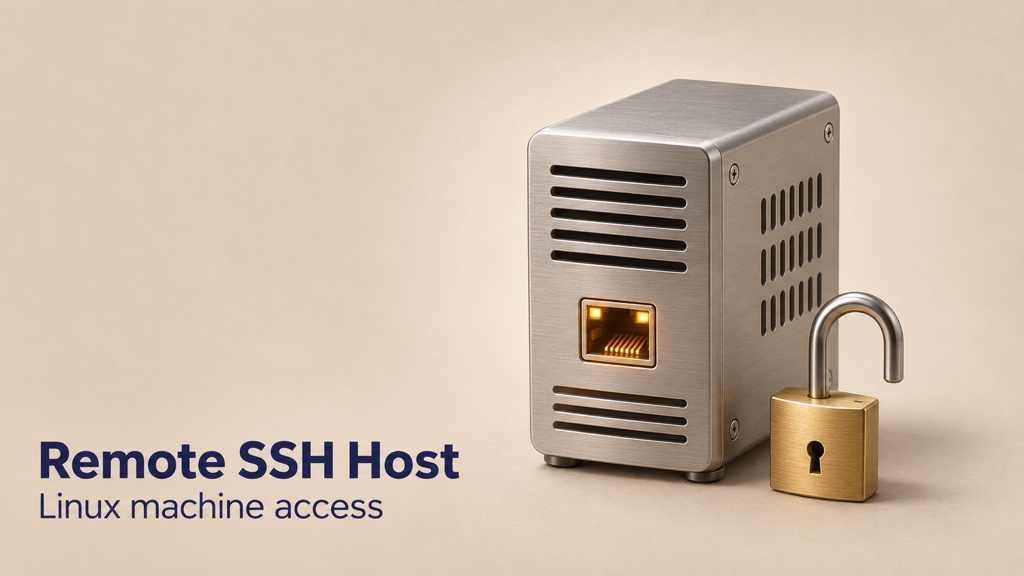
On November 17, 2026, Google released Antigravity App v2.33.0, introducing direct SSH host connections that allow developers to run coding projects and background agents on remote Linux machines.
- Announced
- November 17, 2026 by Google
- Main limit
- Remote hosts cannot run macOS, Windows, or Alpine Linux, and server configuration requires AllowTcpForwarding permissions.
- Source
- antigravity.google
Read the full story
SSH (a secure network protocol for logging into remote servers) lets developers run AI coding agents on powerful cloud computers while typing inside their familiar local desktop interface. This means heavy builds and long-running agent tasks stay active on the remote server even if the local laptop disconnects or goes to sleep.
- Remote host requirements: Connections require 64-bit Linux running glibc 2.26 or later, excluding macOS, Windows, and musl-based distributions such as Alpine.
- Process persistence: Remote agents, terminals, and Git worktrees keep running when users close the local window or close their laptop lid.
- Security and networking: The setup uses standard OpenSSH configurations, proxy jumps, and TCP port forwarding while delegating authentication to local browser OAuth flows.
What changes
Developers can shift heavy agent execution, compilation, and terminal tools from local laptops to dedicated remote Linux servers without leaving the Antigravity desktop interface.
Limits
Remote hosts cannot run macOS, Windows, or Alpine Linux, and server configuration requires AllowTcpForwarding permissions. Antigravity documentation does not disclose any plan restrictions for SSH access.
Community reaction
■Developers asked whether remote agent processes automatically survive unexpected host reboots.
■Systems engineers welcomed the ability to reuse existing OpenSSH configurations and SSH agent keys without custom daemons.
■Other users noted that remote desktop browser tools remain restricted compared to local windows.
Big picture: Moving autonomous agent execution to remote Linux servers allows teams to run long-running engineering workflows without tying up local laptop battery or compute resources.
Dedicated SSH windows isolate remote terminal tasks and agent workspaces
According to the official SSH documentation, each connected server opens in a dedicated application window marked with the host name in the title bar. The remote environment runs agent tools and shell commands directly inside the target server user space, creating isolated working directories for server processes and agent states.
The setup documentation at Google Antigravity Docs confirms that local machines must run Antigravity App v2.33.0 or later on macOS, Windows, or Linux, alongside a functional OpenSSH binary. Remote servers must run 64-bit Linux with glibc 2.26 or later, which includes Ubuntu 18.04, Debian 10, and RHEL 8, while Alpine Linux remains unsupported due to its musl library.
Browser limitations and subscription rules separate SSH from remote agent tiers
In the connection guide, Google outlines key behavioral differences between local windows and remote SSH sessions. The side panel browser is disabled in SSH mode, and web links open in the local default web browser, while automated browser navigation connects exclusively to remote Google Chrome instances with debugging enabled.
Per the Antigravity plans documentation, Google does not restrict SSH connectivity to higher subscription tiers, distinguishing it from Google-managed remote agents on Pro and Ultra plans. Users can also inspect CLI release notes locally by running the /changelog command, as detailed in the CLI command reference, while teams building specialized cloud stacks can enable curated integrations through Build with Google bundles.
Read more · Google Antigravity Changelog ↗ · Connect over SSH Documentation ↗ · Antigravity CLI Changelog Command Reference ↗ · Build with Google Documentation ↗ · Antigravity Plans and Pricing ↗
Xero connects read-only accounting to ChatGPT for month-end drafts

As of November 20, Xero’s campaign page describes a ChatGPT for Accounting connector, allowing small businesses to bring a live view of their accounting books into conversational chat sessions to prepare month-end report drafts.
Read the full story
The integration lets business owners discuss revenue trends and overdue invoices with ChatGPT while keeping their financial data locked in view-only mode. Because the AI cannot post changes to accounting ledgers, users can draft summaries and compare financial periods without risking accidental bookkeeping modifications.
- Read-only architecture: The connector forbids creating, editing, approving, reconciling, paying, or posting journal entries in connected Xero accounts.
- Multi-business switching: Users can switch between different business organizations by name within the same chat session without repeated logins.
- Data privacy terms: Xero states that OpenAI does not use financial data accessed through the plugin to train its machine learning models.
What changes
Business owners and accounting teams can review real-time cash flow figures, overdue invoices, and financial comparisons inside ChatGPT conversations using standardized reporting templates.
Limits
The publication date is not disclosed on the Xero campaign page, and OpenAI has not published separate technical documentation for this plugin. Reported integrations with QuickBooks remain unconfirmed.
Community reaction
■Small business owners questioned whether read-only protections fully prevent unintended data sharing across shared chat histories.
■Bookkeepers noted that drafting month-end summaries in chat could save preparation time ahead of formal reconciliations.
■Financial managers asked for clarification on whether custom chart of accounts templates require manual formatting.
Big picture: Integrating read-only financial data into chat assistants provides analytical leverage for business planning while maintaining necessary guardrails against automated ledger corruption.
Guardrails keep accounting actions confined to read-only financial reviews
According to the Xero campaign page, the accounting connector enforces strict read-only permissions that prevent any automated modifications to core ledger records. The tool explicitly blocks creating, editing, approving, reconciling, paying, or posting journals, ensuring that all actual financial operations remain strictly manual inside the core Xero software.
The vendor documentation on the ChatGPT integration portal notes that users can query overdue invoice amounts and upcoming bill schedules across different organizations. Conversations can compare revenue and expense lines against prior dates, generating structured drafts that business owners can review with professional accountants before approving ledger adjustments.
Pricing tiers and data governance define organizational deployment limits
Access to the plugin requires an active accounting subscription. According to the Xero pricing directory, the Starter tier costs 3.20 dollars per month for the first three months before renewing at 32 dollars per month. Higher tiers include Standard at 54 dollars monthly and Premium at 82 dollars monthly, serving an estimated base of 5.1 million customers worldwide who manage invoicing and bank reconciliation.
On the data privacy side, Xero’s integration terms emphasize that OpenAI does not utilize accounting figures transmitted through the connector for training foundation models. However, broader conversational inputs and uploaded documents remain subject to each organization’s specific ChatGPT workspace settings, making strict administrative oversight essential when teams connect proprietary financial records.
Read more · Xero ChatGPT Integration Campaign ↗ · Xero Subscription Pricing Plans ↗
Tencent releases Hy4 open weights with 770B MoE architecture

As of November 20, Tencent lists open weights for Hy4 on Hugging Face, introducing a 770-billion-parameter Mixture-of-Experts architecture that processes text, images, and video across a 1-million-token context window.
Read the full story
Hy4 is an open-weight artificial intelligence model that combines language and vision capabilities, activating only a small portion of its total parameters for each word it processes. This sparse design allows organizations to run a massive multimodal system with the operational efficiency of a much smaller 49-billion-parameter model.
- Sparse parameter architecture: The model contains 770 billion total parameters across 78 layers, activating 49 billion text parameters and 1.23 billion vision parameters per token.
- Long context window: Hy4 supports a context window of 1,048,576 tokens, utilizing Gated DeepSeek Sparse Attention and a 3.3-billion-parameter drafter for speculative decoding.
- Domain evaluations: Tencent reports benchmark scores of 3.04 out of 4 across 579 financial tasks and improvements of 19.1% on game development evaluations over Hy4 preview.
What changes
Enterprises and developers can download open weights for Hy4, Hy4-FP8, and base checkpoints to run localized multimodal inference across text, image, and video inputs.
Limits
The repository System Card PDF was empty upon release, leaving safety and filtering practices unverified. Performance gaps remain compared to proprietary models on advanced mathematics and long-horizon coding.
Community reaction
■AI researchers discussed the memory requirements needed to host a 770-billion-parameter model even with 49 billion active parameters.
■Open source developers expressed enthusiasm for official GGUF quantization formats compatible with local runtimes.
■Engineers questioned whether the custom Tencent Hy License restricts commercial deployment across different operating jurisdictions.
Big picture: The arrival of 770-billion-parameter open-weight multimodal models gives enterprises powerful localized alternatives to proprietary frontier APIs, provided they possess substantial hosting infrastructure.
Mixture of experts design pairs sparse activation with speculative decoding
According to the Hy4 model card, the language backbone consists of 78 layers, beginning with one dense layer followed by 77 Mixture-of-Experts layers. Each sparse layer contains 256 routed experts and one shared expert, routing every token through eight routed experts alongside the shared expert to maintain predictable compute overhead.
To accelerate generation across its 1,048,576-token context window, Tencent integrated a built-in 5-layer DFly2 drafting model comprising 3.3 billion parameters, as documented on Hugging Face. The architecture uses Multi-head Latent Attention with an indexer head that selects the top 2,048 tokens, allowing fast speculative decoding while reusing key-value cache states at constant computational cost.
Domain benchmarks highlight financial workflows and game logic adaptations
In technical evaluations published on the model repository, Tencent reported that Hy4 scored 3.04 out of 4 across 579 real-world financial tasks, ranking first among tested open-weight models ahead of DeepSeek-V4.1-Flash at 2.97 and Kimi K3.1 Pro at 2.68. The team claimed internal upgrades reduced the model’s hallucination rate to 5.45%, down from 15.76% observed in the earlier Hy4 preview release.
Deployment instructions on Tencent’s Hy4 card support vLLM, SGLang, and Docker runtimes. Third-party serving catalogs on Hugging Face Inference Providers offer managed endpoints that route requests across cloud providers without markup. Developers can also load quantized GGUF formats in tools like Ollama and LM Studio, though production hosting of the unquantized weights requires multi-GPU enterprise clusters.
Read more · Tencent Hy4 Hugging Face Model Card ↗ · Hugging Face Inference Providers Documentation ↗
Vercel Labs emulate adds local OpenAI and Anthropic API mocking
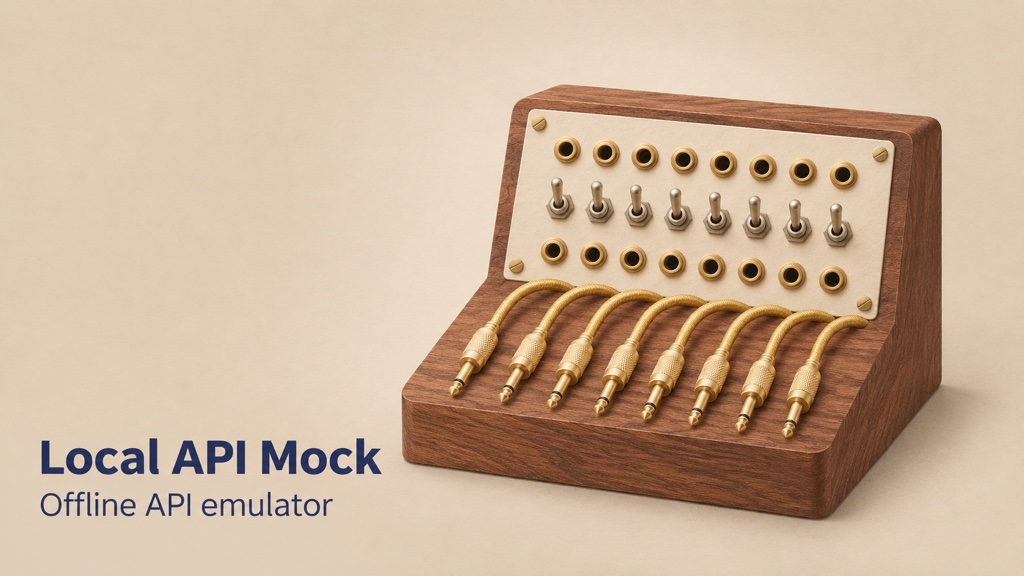
On November 18, 2026, Vercel Labs released emulate v0.14.0, introducing an offline AI emulator that reproduces OpenAI and Anthropic API endpoints locally without requiring API keys or consuming billable tokens.
- Announced
- November 18, 2026 by Vercel Labs
- Main limit
- The tool provides deterministic rule-based mock responses to test application logic and flow, meaning it cannot evaluate actual model reasoning quality, response accuracy, or prompt effectiveness.
- Source
- github.com
Read the full story
The tool is a local mock server that acts like OpenAI and Anthropic APIs on a developer’s computer, returning predictable test answers without connecting to the internet. This allows engineers to verify that their software handles AI responses, streaming text, and network errors correctly without paying token fees or leaking private test data.
- Local offline endpoints: The AI emulator listens on localhost port 4014 by default, returning deterministic rule-based responses for OpenAI Responses, Chat Completions, and Anthropic Messages.
- Feature coverage: Emulated behaviors include server-sent event streaming, structured JSON outputs, tool call loops, model reasoning blocks, refusals, and simulated disconnects.
- Zero configuration startup: Running npx emulate starts local emulators for fifteen popular services on loopback address 127.0.0.1, including GitHub, Stripe, AWS, and AI services.
What changes
Software teams can run automated continuous integration tests and local development loops against OpenAI and Anthropic SDKs without internet connectivity, valid credentials, or API usage costs.
Limits
The tool provides deterministic rule-based mock responses to test application logic and flow, meaning it cannot evaluate actual model reasoning quality, response accuracy, or prompt effectiveness.
Community reaction
■Full-stack developers praised the inclusion of localhost port 4014 alongside existing Stripe and GitHub service mocks.
■Test automation engineers asked whether custom seed files could easily simulate complex multi-turn tool loops.
■Maintainers discussed the performance benefits of eliminating external API latency from continuous integration pipelines.
Big picture: Local API emulation allows engineering teams to shift AI integration testing into offline CI pipelines, reducing developer token expenses and catching application bugs before deployment.
Deterministic local codecs mirror commercial inference endpoints
According to the emulate repository, the new AI emulator package implements specialized codecs for OpenAI and Anthropic protocols. The local service intercepts calls intended for OpenAI Responses, standard Chat Completions, and Anthropic Messages, allowing standard client libraries like the Vercel AI SDK to operate seamlessly against localhost port 4014 without external network access.
The release notes for emulate v0.14.0 confirm that the mock server reproduces server-sent event streaming, structured JSON outputs, simulated tool execution loops, and reasoning tokens. Tests can also trigger synthetic errors, abrupt network disconnects, and stalled responses, giving developers reproducible mechanisms to validate client error recovery routines under edge conditions.
Multi-service loopback architecture speeds continuous integration suites
In the project documentation, Vercel Labs explains that starting the CLI launches an entire suite of fifteen built-in emulators across sequential loopback ports from 4000 to 4014. These services include GitHub on port 4001, Google on port 4002, AWS on port 4007, and Stripe on port 4009, enabling developers to test complex multi-service architectures entirely on local machines without cloud credentials.
Alongside the new AI endpoints, the v0.14.0 changelog introduced an external backend option for AWS emulation, forwarding storage and queue services while keeping local Cognito authentication. By executing automated test suites against local in-memory states using tools like Vitest and Jest, engineering teams can eliminate intermittent network failures and accelerate pull request validation cycles.
Read more · Vercel Labs Emulate Repository ↗ · Vercel Labs Emulate v0.14.0 Release Notes ↗
OpenAI Responses API drops reasoning items after prefix edits

On November 17, 2026, OpenAI published an API prefix caching guide, warning developers that GPT-6.2 models discard prior reasoning tokens whenever conversation history is edited before an active turn.
- Announced
- November 17, 2026 by OpenAI
- Main limit
- Discarding reasoning items increases token consumption and latency, but keeping prefixes identical avoids re-execution penalties rather than guaranteeing net token reductions.
- Source
- developers.openai.com
Read the full story
When an application changes earlier messages, tool results, or settings in a conversation, OpenAI treats the modified text as an altered prompt prefix and deletes the AI model’s stored reasoning steps. This forces the model to redo its logical thinking from scratch, which increases token costs, slows down responses, and can reduce answer quality.
- Reasoning item dropping: Modifying earlier inputs or tool outputs causes GPT-6.2 Astra and Sol to drop subsequent reasoning items, raising re-computation costs.
- Append-only configuration: OpenAI instructs developers to append configuration_update items and additional_tools to the end of input arrays rather than altering existing definitions.
- Instruction placement shift: In GPT-6.2, top-level instructions are automatically appended after the input array, subjecting them to un-cached input token rates.
What changes
Developers integrating GPT-6.2 into multi-turn agents must keep prompt prefixes unchanged and append all setting adjustments, new tools, and turn instructions to the end of the context.
Limits
Discarding reasoning items increases token consumption and latency, but keeping prefixes identical avoids re-execution penalties rather than guaranteeing net token reductions.
Community reaction
■API developers expressed surprise that editing developer messages or tool outputs silently purges cached reasoning steps.
■Agent framework authors discussed migrating dynamic tool declarations to the new append-only additional_tools parameter.
■Systems engineers highlighted the cost impact of top-level instructions being billed at un-cached rates in GPT-6.2.
Big picture: Managing prompt prefixes as strictly append-only logs is now a critical architectural requirement for preventing runaway token costs and preserving reasoning quality in frontier AI agents.
Prefix alterations trigger reasoning item drops and recomputation costs
According to the prefix preservation guide, OpenAI introduced reasoning invalidation rules as a safety mechanism in its frontier models. Modifying prior conversation history, trimming tool execution payloads, or rewriting developer messages alters the prefix, prompting the Responses API to discard downstream reasoning items and forcing the model to re-execute its earlier thought processes.
The vendor documentation on GPT-6.2 migration cautions that lost reasoning tokens can degrade output quality while driving up token usage and response latency. Developers can diagnose these invalidations by inspecting the input_transformations field in Responses API outputs, where items flagged with prefix_mismatch error markers indicate exactly where historical edits severed the prompt cache.
Append-only conventions and caching economics protect agent budgets
To update parameters without invalidating prefixes, OpenAI recommends appending configuration_update items to the tail of the input array rather than editing existing top-level fields, as documented in the developer guide. Similarly, teams should declare new tools via the additional_tools parameter at the end of the payload, while using tool_choice to restrict available functions without changing established definition sequences.
Pricing tables in the prompt caching documentation show that cached prompt prefixes receive up to 95% discounts. Cache read rates are 0.05 times standard input prices for GPT-6.2 Astra and Sol on prompts exceeding 1,024 minimum tokens. However, top-level instructions are now appended after inputs, meaning they incur un-cached rates, while legacy evaluation tools face retirement as the prompt optimizer guide confirms platform deprecation on November 30, 2026.
Read more · OpenAI Prefix Preservation Guide ↗ · OpenAI GPT-6.2 Migration Guide ↗ · OpenAI API Changelog ↗ · OpenAI Prompt Caching Documentation ↗ · OpenAI Prompt Optimizer Deprecation Notice ↗